Chain link is the workhorse fence of Florida: simple, strong, and honest about what it does. It marks a boundary, keeps a yard in and keeps people out. At our yard, chain link is galvanized only — steel wire coated in zinc — for residential and commercial jobs up to 6 feet. This guide covers what galvanized means, how tall your fence can be, how a home job differs from a commercial one, the full system of parts behind the mesh, privacy slats, and the measurements to take before you order.
Galvanized only: what that means
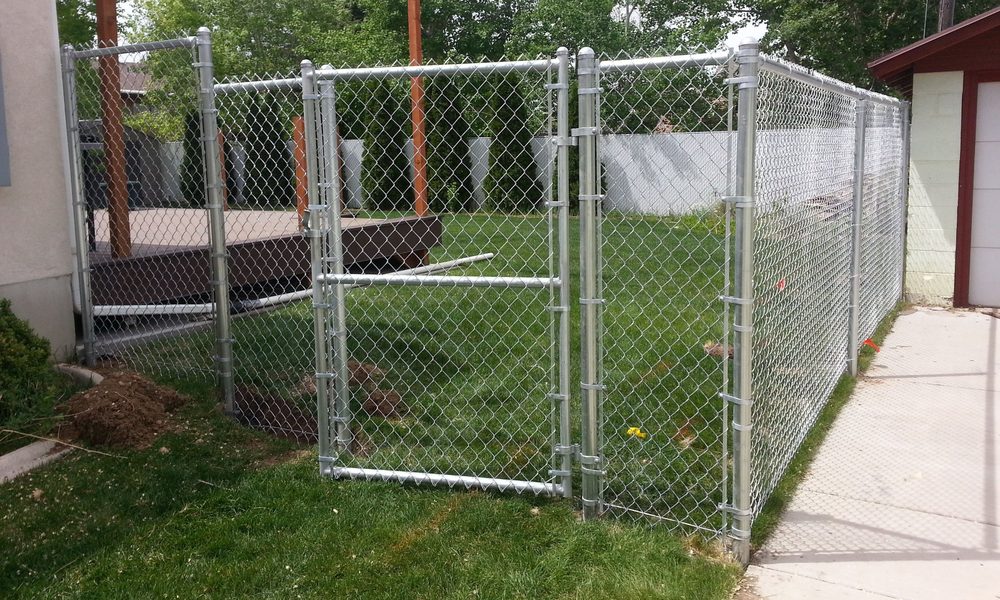
Galvanized means the steel wire is coated in zinc. The zinc layer is what stands between the steel and Florida’s rain and humidity: it corrodes first, slowly, so the wire underneath lasts. That is why it is the standard for yards, schools, parks and storage lots across Central Florida. We supply galvanized chain link only. We do not stock vinyl-coated chain link, the version where the wire carries a plastic coating over the zinc. If a job calls for a coated look, ask the office. Gauge and mesh size vary by job. Ask the office for the gauge and mesh for your job and the team will confirm the right combination from the height, the use and the location.
Heights: up to 6 feet, and the rules that set them
We supply galvanized chain link up to 6 feet. Common heights are 4, 5 and 6 feet, and the height you can build is set by your city and your HOA, not by the material. Most cities cap front-yard fences at 4 feet and allow side and rear fences up to 6 feet, but the exact rule changes from city to city, so check yours before you order. A pool enclosure is a different rule again: a fence around a pool must meet Florida’s barrier requirements for height, gaps and gates, and chain link can only be used there if the whole barrier meets those rules. See our pool fence guide for the barrier rules. Measure the height you want, then check the city and the HOA before you order. A fence that is too tall for its spot is a fence that has to come down.
Residential vs commercial: same mesh, different job
The mesh is the same, but the job is not. A residential chain link fence usually runs along a side or rear boundary, around a dog run, or around a pool enclosure. Heights are 4 to 6 feet, gates are single walk gates or a double driveway gate, and the posts and hardware are sized for a home. A commercial job — a storage yard, a school, a park, a parking lot, a dumpster enclosure — often runs taller, longer and harder: heavier posts, stronger hardware, bigger gates, sometimes a rolling or cantilever gate instead of a swing gate. The fabric is the same galvanized mesh; the posts, rails and gate hardware are what change. Tell the office what the fence is for when you ask for a quote. A backyard parts list will not hold up a commercial yard.
The complete system: more than mesh
A chain link fence is a system, not a roll of mesh. The fabric is the part you see, but it hangs from a top rail, is pulled tight between terminal posts by tension bars and bands, is held to the line posts with ties, and is kept straight at the bottom by tension wire. Caps close the post tops against rain. Hinges and a latch hang the gate and hold it shut. Leave one part out and the fence sags, leans or will not latch — and the missing part is usually the one that delays the job. Our parts guide explains what each piece does. When you order, send the footage, the corners and the gate openings, and the office will help you count the system, not just the mesh.
Privacy slats: an option, not a default
Chain link is see-through by design. If you want to block the view, privacy slats slide into the mesh and close it up. Slats are an option you order with the fence, not something every chain link fence needs. Two things to know before you add them. First, slats catch the wind: a fence with slats takes more wind load than an open fence, so check with the office — and with your city and HOA — before you add them to a tall or long run. Second, slats are sized to the fabric, so ask the office which slat fits your mesh. If privacy matters more than airflow, slats are the simple answer.
What to measure before you order
A good quote starts with good measurements. Walk the fence line and write down the linear feet, run by run, not counting the gate openings. Mark every corner, every end and every gate, and measure each gate opening — a walk gate and a driveway gate are different openings. Note the slope and anything in the line: trees, roots, a ditch, a shed, a utility box. Take a photo and a quick sketch with the measurements on it. Our measuring guide walks through the same steps. Send the photo and the sketch with your quote request and the team will check the footage with you before the material is ordered.
Chain link is the simplest fence we sell, and the easiest to order wrong — a missing part, a wrong height, a gate opening measured once. Send us the footage, the height and the gate openings, with a photo or a sketch, and we will prepare the quote. See the chain link category for the full range.